Southern Thailand
Massaman Curry
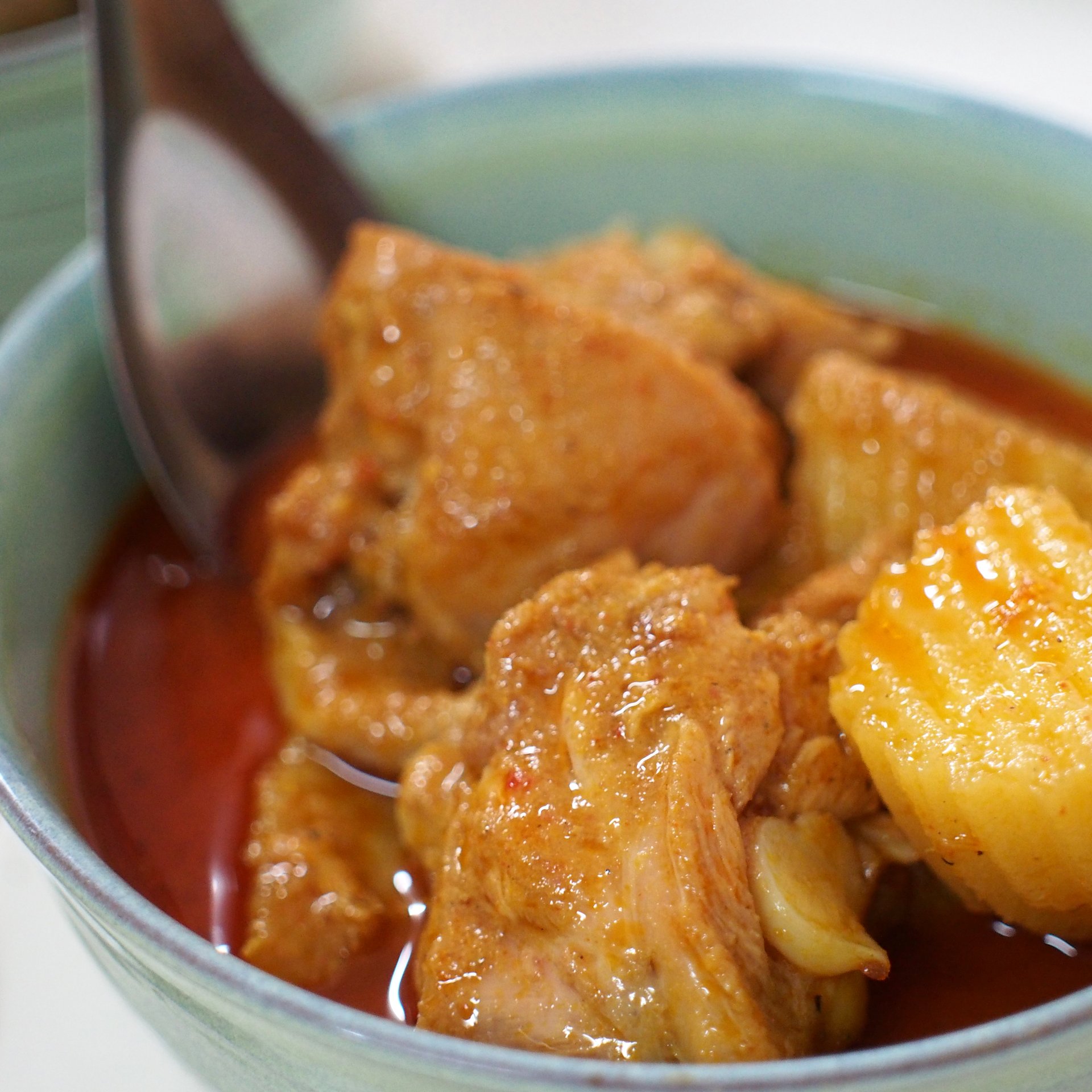
A Persian-Indian-Malay-Thai synthesis curry with beef, potatoes, peanuts, and a base of cinnamon, cardamom, and star anise — the slowest, mildest, most fragrant of the Thai curries.
Dry spices, not just fresh.
Most Thai curry pastes (green, red, jungle) are built on fresh aromatics — lemongrass, galangal, kaffir lime, fresh chilies. Massaman adds the dry-spice register of Indian and Persian cooking: cinnamon, cardamom, star anise, cloves, cumin, nutmeg, mace. The result is a curry that smells more like a North African or Mughal dish than a Thai one. The fingerprint is the spices, not the heat — massaman is among the mildest of the Thai curries.
4 · Plate
Southern Thailand
Massaman Curry
A Persian-Indian-Malay-Thai synthesis curry with beef, potatoes, peanuts, and a base of cinnamon, cardamom, and star anise — the slowest, mildest, most fragrant of the Thai curries.
The most cosmopolitan dish in the Thai repertoire. Massaman (แกงมัสมั่น) is generally accepted as a 17th-century Persian-Muslim-trader contribution to Thai cooking — the name probably comes from musulman, the Persian word for Muslim, via Malay. Persian merchants and Indian Muslims settled along the Andaman coast through the Ayutthaya period (1351–1767), and the dish travelled with them. The Thai kitchen kept the dry spices and added coconut milk, fish sauce, palm sugar, and tamarind, producing a dish that is unmistakably Thai but speaks all the way back to its founding ingredients.
CNN’s 2011 50 World’s Best Foods poll ranked massaman curry at #1 — a result that surprised most Thais, who would more naturally have nominated tom yum or green curry. The poll wasn’t wrong; massaman is one of the most distinct, technically demanding, and historically interesting dishes in the Thai canon, even if it isn’t the most-eaten.
Eaten with roti or rice.
Southern Thailand's Muslim-Thai households eat massaman with roti (a Malaysian-Indian flatbread). The Bangkok version more often gets jasmine rice. The dish wants something starchy to soak — the curry is thick, oily, and built around its potatoes and peanuts, not as soupy as a green curry.