An archive of the food lifecycle
Cacio e Pepe
Foodbook follows a dish (or an ingredient) through up to four lifecycle stages — the farm that grew it, the garden that nurtured it, the kitchen that cooked it, the meal where it landed. Each entry weaves them together.
Recent dishes

Cacio e Pepe
Three ingredients — pasta, pecorino, black pepper — and a window of about ninety seconds to get them to behave.

Spaghetti alla Carbonara
Eggs, cheese, pepper, cured pork — the four-ingredient Roman that refuses to forgive you.

Pesto alla Genovese
Green sauce, mortar and pestle, peak basil — a fifteen-minute counterweight to the six-hour ragù.
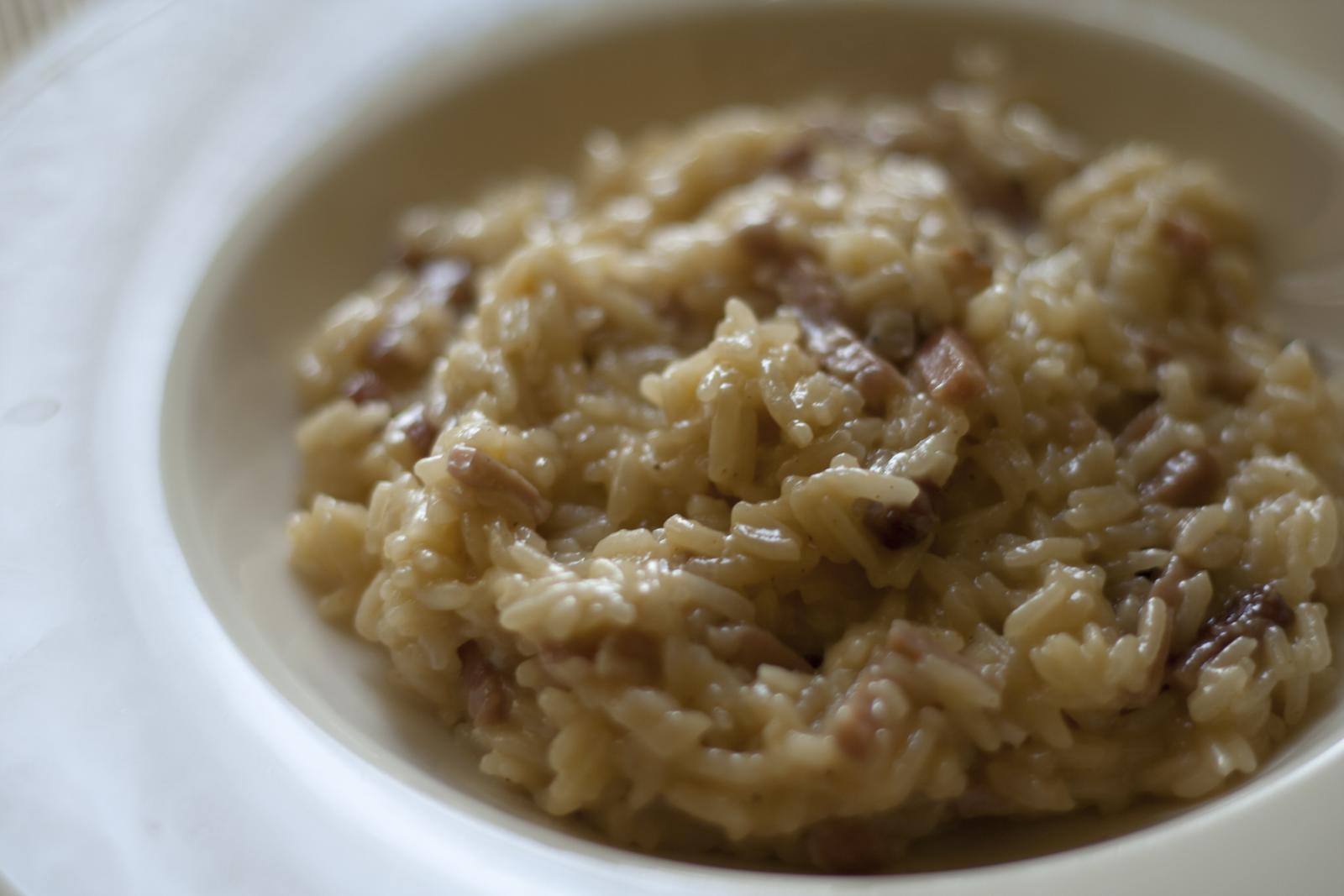
Risotto alla Milanese
Saffron, rice, marrow — the Milanese dish that gilds the plate with the world's most expensive spice.

Margherita Pizza
Tomato, mozzarella, basil — three colours of the flag on a 90-second flatbread.

Tonkotsu Ramen
Pork bones, twelve hours, a hard boil — milky-white broth that started as bones and water and ends as the heaviest soup in Japan.

Lasagne alla Bolognese
Green spinach pasta, beef-and-pork ragù finished with milk, besciamella, parmigiano — the Bolognese baked pasta and the model for every other lasagne.

Mapo Tofu
Numbing, spicy, oil-red — the Sichuan dish that taught the world the word <em>mala</em>.

Tiramisù
Coffee-soaked ladyfingers, yolk-and-mascarpone cream, cocoa dusting — the Italian dessert that conquered the world in thirty years.

Miso Soup
Dashi, miso, tofu, wakame — Japan's daily breakfast bowl, built on a broth that won't tolerate a boil.
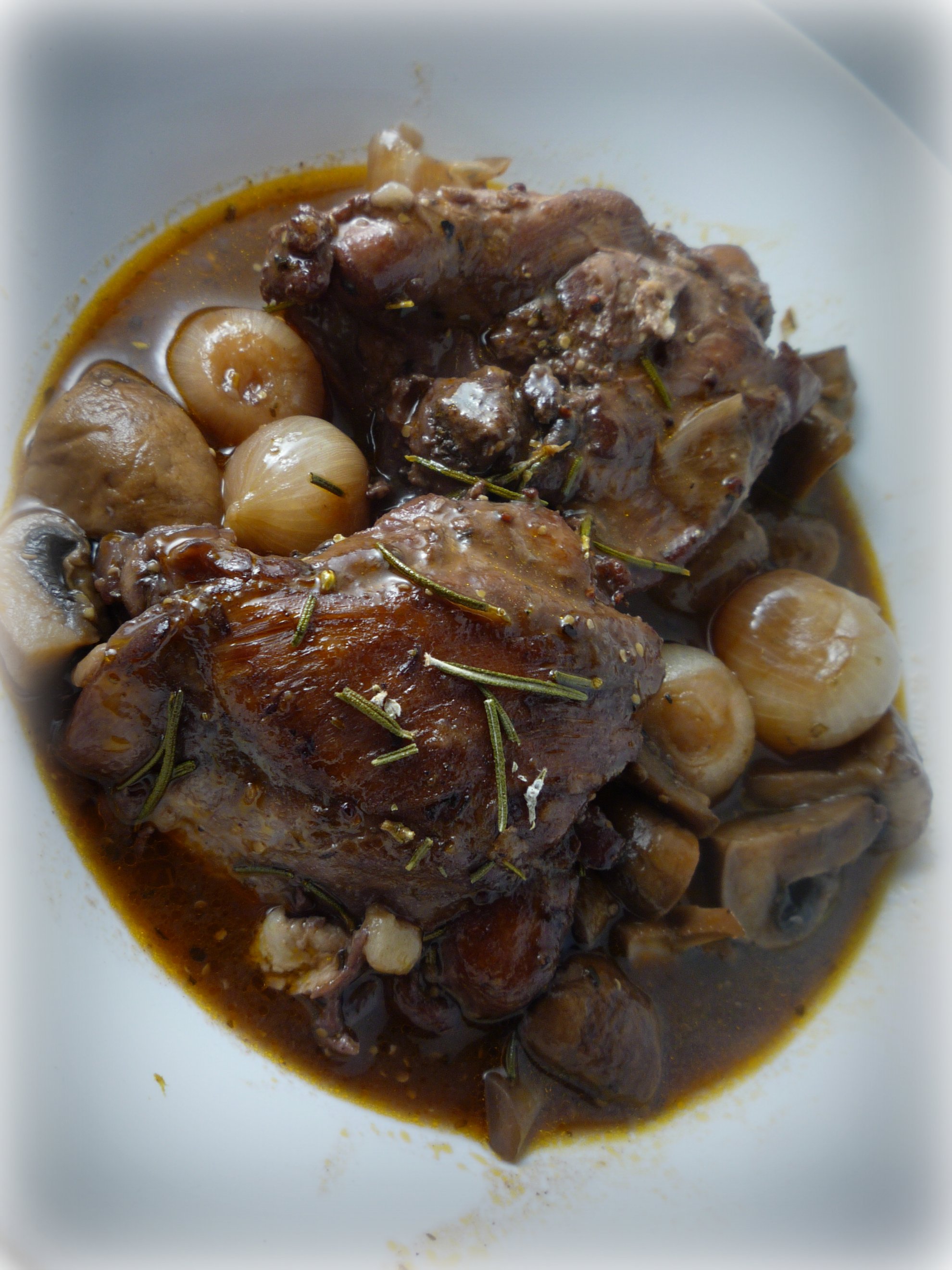
Coq au Vin
A tough old rooster and a bottle of Burgundy, given two hours to come to an understanding.
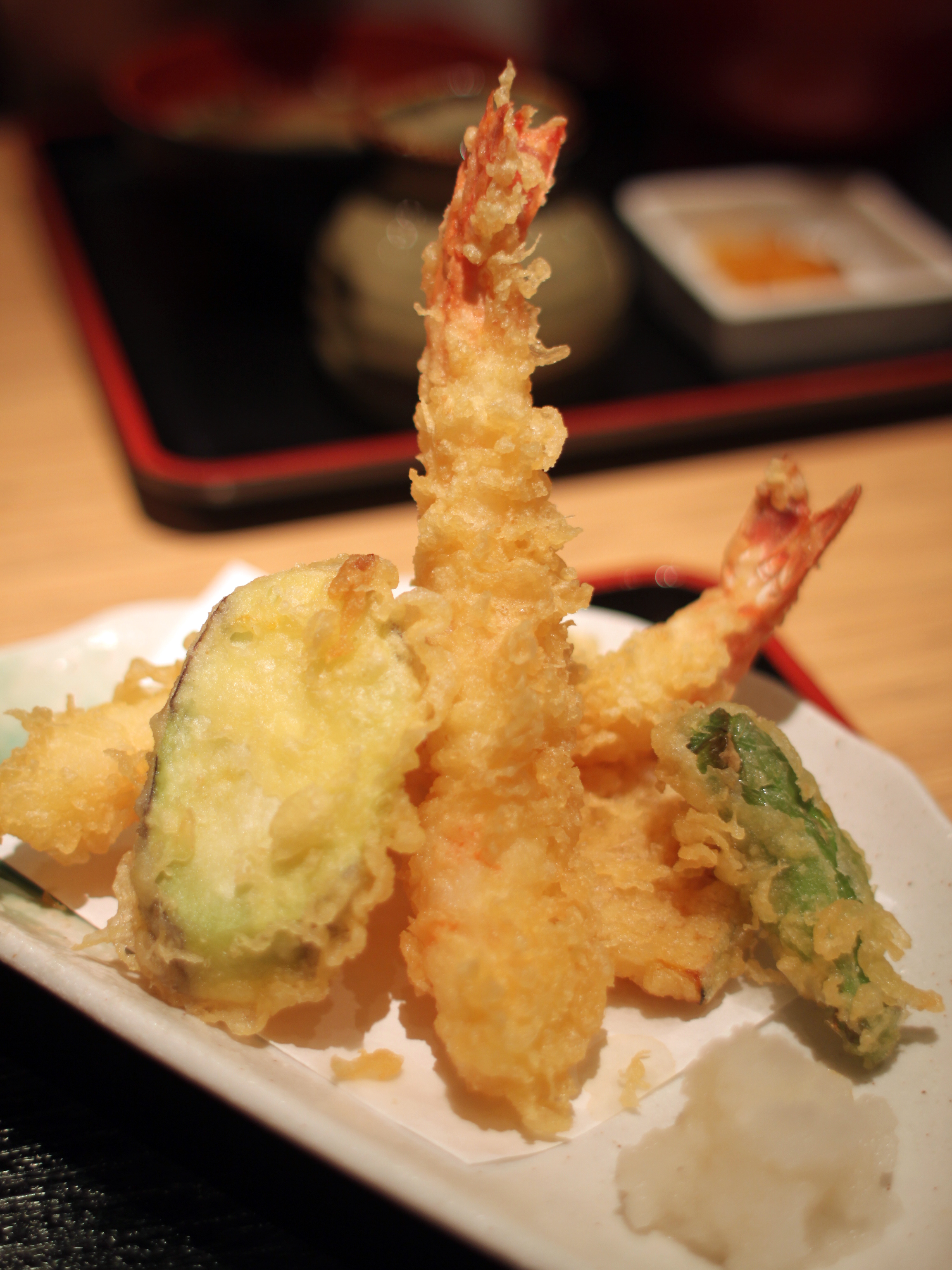
Tempura
Ice-cold batter, hot oil, lacy crust — a Japanese refinement of a Portuguese technique.

Pad Thai
Sour-salty-sweet rice noodles, finished at the table with lime, peanut, and chili — Thailand's most-exported dish.

Jiaozi
Pork-and-chive dumplings — northern China's New Year food, the ancestor of every potsticker, gyoza, and pierogi cousin.

Tacos al Pastor
Mexico's most famous taco — a Lebanese shawarma spit, transplanted to Puebla, dressed in chiles and pineapple.

Yangzhou Fried Rice
Cold rice, hot wok, char siu and shrimp — the canonical Chinese fried rice and the standard every other version measures against.

Murgh Makhani
Delhi, 1950s — tandoori chicken meets a tomato-cream gravy and travels around the world.

Boeuf Bourguignon
Beef chuck, Burgundy, lardons, pearl onions, mushrooms — the French peasant braise that became *haute cuisine* through Julia Child's translator.
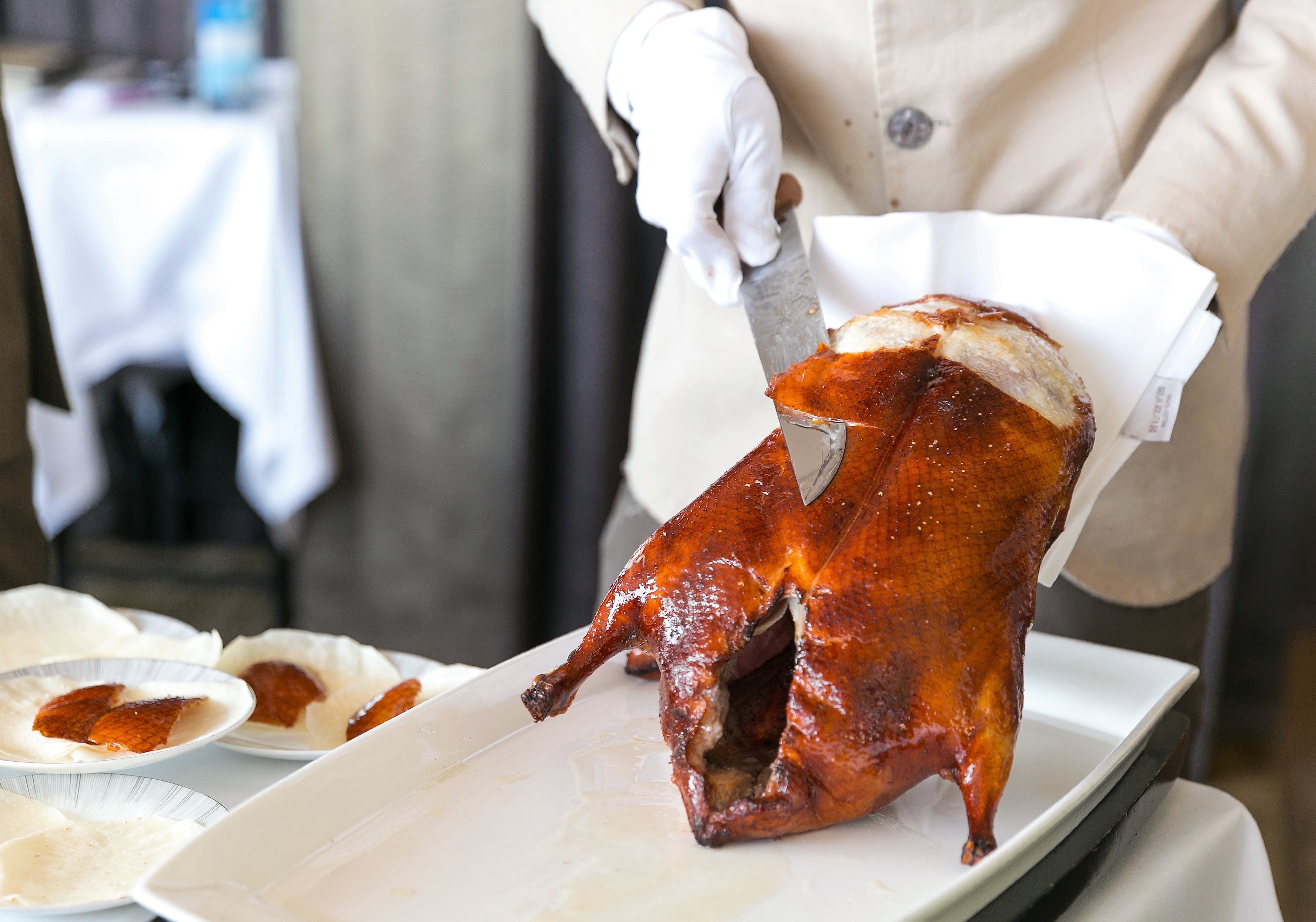
Peking Duck
The dish that engineers a bird — air-dried skin, mahogany glaze, three courses from one duck.

Ratatouille Niçoise
Provençal summer vegetables — eggplant, zucchini, peppers, tomato — each cooked separately, folded together, eaten the next day.

Hummus
Cooked chickpeas, tahini, lemon, garlic — a dish that argues with itself across borders and still tastes the same in every kitchen.

Guacamole
Hass avocado, white onion, serrano, cilantro, lime, salt — the Mexican five-ingredient table dish, eaten in the fifteen minutes after it's made.

Gaeng Keow Wan Gai
Thai green curry — the coconut-fat-suspension dish that lives or dies by whether you cracked the cream.

Paella Valenciana
Chicken, rabbit, two beans, saffron — the rice dish that Valencia wrote and the rest of the world misquoted.

Tandoori Chicken
Yogurt-marinated bone-in chicken char-roasted in a 500°C clay oven (or the closest a home kitchen can manage).

Bouillabaisse Marseillaise
Marseille's saffron-and-orange fish stew — a fisherman's leftover dish that grew into a Provençal institution with a written charter.

Tabbouleh
A parsley salad with bulgur — not the reverse. Beirut's standard mezze, fragrant with mint and lemon.

Tortilla Española
Potato, egg, onion, olive oil, salt — five ingredients into Spain's universal bar-counter wedge.

Nigiri-zushi
A finger of seasoned rice and a slice of fish — Edo-period fast food that became the standard by which all other one-bite dishes are judged.

Crème Brûlée
Vanilla custard set in a bain-marie, demerara sugar caramelised under a blowtorch to a hard amber shell.

Mole Poblano
Puebla's brown-black-velvet sauce — chiles, seeds, nuts, fruit, spices, chocolate — the most complex single dish in the Americas.

Tom Yum Goong
Hot, sour, salty, sweet — Thailand's most famous soup, built on shrimp heads and a triangle of lemongrass, galangal, kaffir lime leaf.

Köttbullar
Swedish meatballs — beef-pork blend, cream gravy with a splash of soy, lingonberry jam on the side.

Gravlax
Salt, sugar, dill, time — Scandinavian fishermen's preservation, modernised into a brunch staple.

Kung Pao Chicken
Sichuan stir-fry of cubed chicken, dried chiles, Sichuan pepper, peanuts — mala balanced, dark-vinegar sauced.

Biryani
Hyderabadi dum biryani — raw meat marinated in spiced yogurt, layered with par-cooked basmati, sealed under dough, and cooked entirely by trapped steam.

Falafel
Raw soaked chickpeas, fistfuls of fresh herbs, a hot fryer — the Levantine street snack that travels everywhere and stays recognisably itself.

Saag Paneer
Punjabi spinach-and-fresh-cheese curry — the vegetarian Indian dish most often quoted, often misnamed *palak paneer*.

Gazpacho Andaluz
Cold tomato-and-bread soup from Andalusia — drunk from a glass on a hot afternoon, eaten from a bowl at lunch.

Adobo
Meat braised in vinegar, soy sauce, garlic, peppercorns, and bay leaf — the Philippines' national-dish-by-default, with as many versions as households.

Bak Kut Teh
Pork ribs simmered for hours in a peppery garlic broth (Singapore Teochew style) or a dark herbal medicinal broth (Klang Hokkien style) — the breakfast dish that takes itself seriously.

Bánh Mì
A French baguette colonised by a Vietnamese pantry — pâté, cold cuts, pickled daikon and carrot, cilantro, chili, in a crackling crust.

Bibimbap
Rice, vegetables, gochujang, an egg — a Korean bowl that's photographed for its arrangement and eaten by mixing it apart.

Bulgogi
Thin-sliced beef in a soy-pear-sesame marinade, grilled fast at the table — the dish that taught the world Korean BBQ.

Bún Bò Huế
A spicy lemongrass-and-shrimp-paste beef broth with round rice noodles, beef shank, pork knuckle, and a chili-oil slick — Hue's rival to pho and arguably the better soup.

Bún Chả
Grilled pork patties and slices in a bowl of warm fish-sauce dressing, rice vermicelli on the side, fresh herbs by the handful — Hanoi's lunchtime institution.

Char Kway Teow
Flat rice noodles seared in pork lard with prawns, cockles, Chinese sausage, egg, chives, and bean sprouts — Penang's smoky wok-breath noodle, the Singapore-Malaysian hawker king.

Char Siu
Cantonese honey-glazed barbecued pork — mahogany red, sticky-charred edges, hung over a fire on long forks ("fork-roasted").

Char Siu Bao
Soft white steamed buns filled with diced sweet-savoury char siu pork — the Cantonese dim sum bun that turned the leftover roast pork into a second dish.

Chicken Tikka Masala
Tandoor-grilled chicken in a tomato-cream sauce with garam masala and fenugreek — the British-Bangladeshi invention that became Britain's most-eaten dish.

Chili Crab
Whole mud crab in a sweet-savoury tomato-chili-egg gravy — Singapore's seafood spectacle, eaten with mantou buns to mop the sauce.

Congee
Rice simmered with water (or stock) into a savoury porridge — China's universal breakfast dish, with as many regional names as provinces (*jook*, *zhou*, *muay*, *bubur*).

Dal Makhani
Whole black urad lentils and red kidney beans simmered overnight with cream, butter, and tomatoes — Delhi's *Moti Mahal* invention that became the Punjabi banquet dal.

Dan Dan Noodles
A spoonful of chili-soy-vinegar sauce in the bowl, hot noodles tossed on top, crispy pork crumble and peanuts to finish — Sichuan street food named after the bamboo pole the seller carried.

Fish Amok
Freshwater fish in a thick coconut-and-*kroeung* spice mousse, steamed in banana-leaf cups — Cambodia's national dish, a gentler cousin to its Thai and Lao curry neighbours.

Gado-Gado
Blanched and raw vegetables, hard-boiled egg, tempeh, and tofu over a thick peanut-sauce dressing — Indonesia's mixed-vegetable salad, the cousin of satay's peanut sauce.

Galbi
Marinated beef short rib, butterflied flat against the bone, grilled over charcoal — Korean BBQ's most prestigious cut, sweet-savoury and edge-charred.

Gỏi Cuốn
Rice-paper rolls of poached prawn, pork belly, vermicelli, herbs, and lettuce — Vietnam's fresh, un-fried answer to the spring roll, dipped in peanut-hoisin sauce.

Gua Bao
A folded steamed bun cradling braised pork belly, mustard greens, ground peanuts, and cilantro — Taiwan's pocket sandwich and a global street-food crossover.

Gulab Jamun
Deep-fried *khoya* (reduced-milk) dumplings soaked in a cardamom-and-rosewater syrup — Indian and Pakistani celebration dessert, eaten warm.

Gyoza
Pan-fried, crescent-pleated dumplings with a crispy bottom and steamed top — Japan's adaptation of the Chinese jiaozi, now its own dish.

Gyudon
Thin-sliced beef simmered with onions in a sweet-soy dashi, ladled over a bowl of hot rice — Japan's three-minute lunch.

Hainanese Chicken Rice
Poached chicken, fragrant rice cooked in the broth, three dipping sauces — Singapore's national dish hides its complexity inside complete simplicity.

Halo-Halo
Shaved ice, evaporated milk, sweetened beans, jellies, fruit, ube, leche flan, and a scoop of ice cream — the Philippines' kitchen-sink dessert, eaten in summer heat.

Har Gow
Crystal-skinned shrimp dumplings — the Cantonese dim sum standard by which every dim sum kitchen is judged.

Hoppers
A bowl-shaped rice-and-coconut crepe with crispy lace edges and a soft yeasty centre, often cradling an egg — Sri Lanka's breakfast and late-night dish.

Hot Pot
A simmering broth at the table, raw ingredients dipped in by the diner — Chongqing's communal dish, named for its method, not its meat.

Japchae
Glass noodles tossed with sesame oil, soy, and a rainbow of julienned vegetables — Korea's celebration banchan, originally a noodle-less royal court dish.

Karaage
Bite-sized chicken thigh marinated in soy, sake, and ginger, dredged in potato starch and fried golden — Japan's home-and-izakaya fried chicken.
Kare-Kare
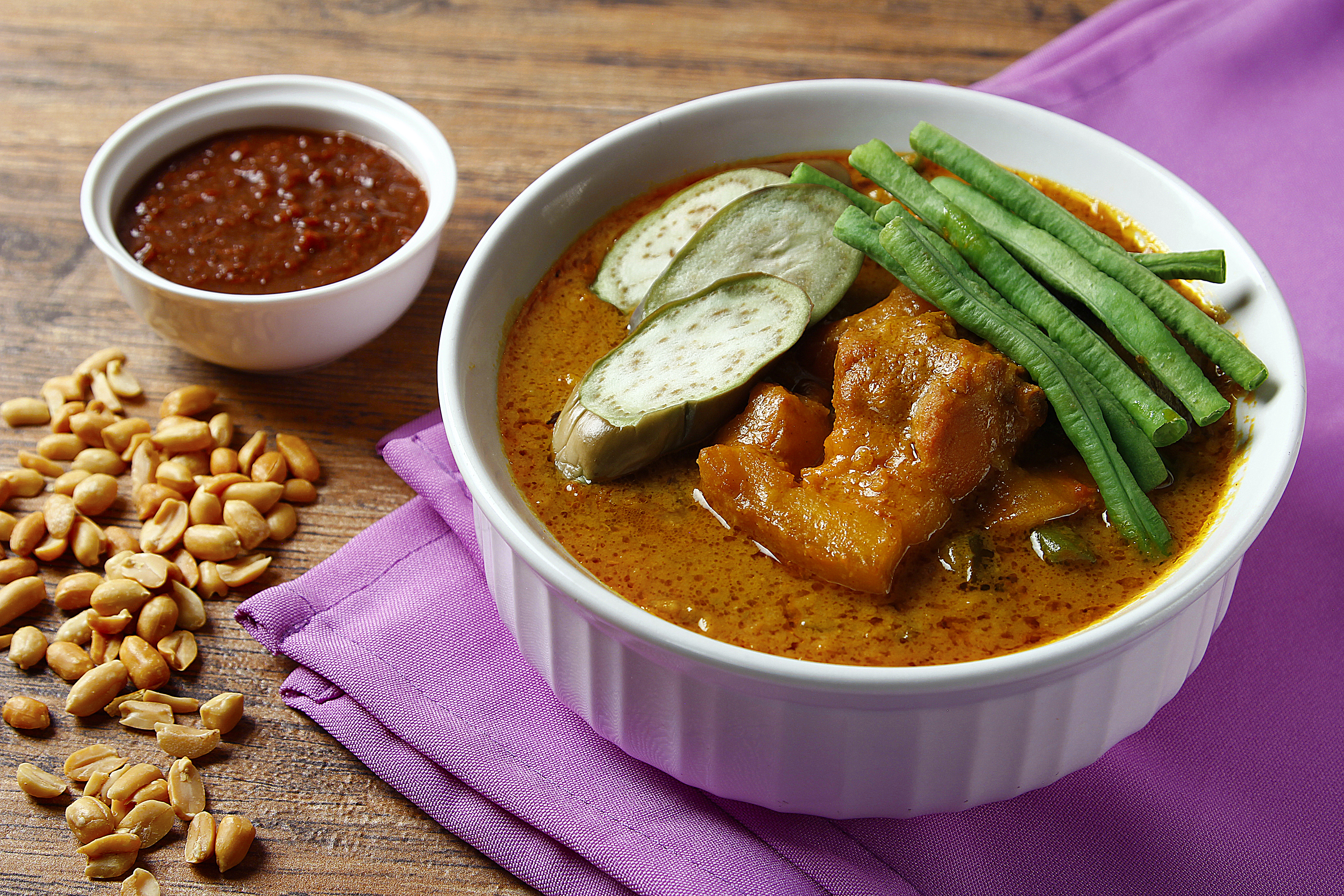
Oxtail and vegetables in a thick orange peanut-and-annatto sauce, served with a side of bagoong shrimp paste — the Filipino fiesta dish that takes a day to make.

Katsu Curry
Panko-crusted pork cutlet over rice, smothered in dark Japanese curry — a salaryman lunch that became a global comfort dish.

Khao Soi
Egg noodles in a coconut-curry broth with braised beef or chicken, crispy fried noodles on top, pickled mustard greens on the side — northern Thailand's defining dish.

Kimbap
Sesame-oil-seasoned rice rolled in nori around pickled radish, egg, spinach, and ham or tuna — Korea's portable picnic and lunchbox dish.

Kimchi Jjigae
A bubbling red stew of aged kimchi, pork belly, and tofu — Korean comfort food that demands a bowl of rice and a winter day.

Korean Fried Chicken
Twice-fried, glass-thin crust, glossed in soy-garlic or gochujang — the Korean answer to American fried chicken, eaten with pickled radish and beer.
Laksa
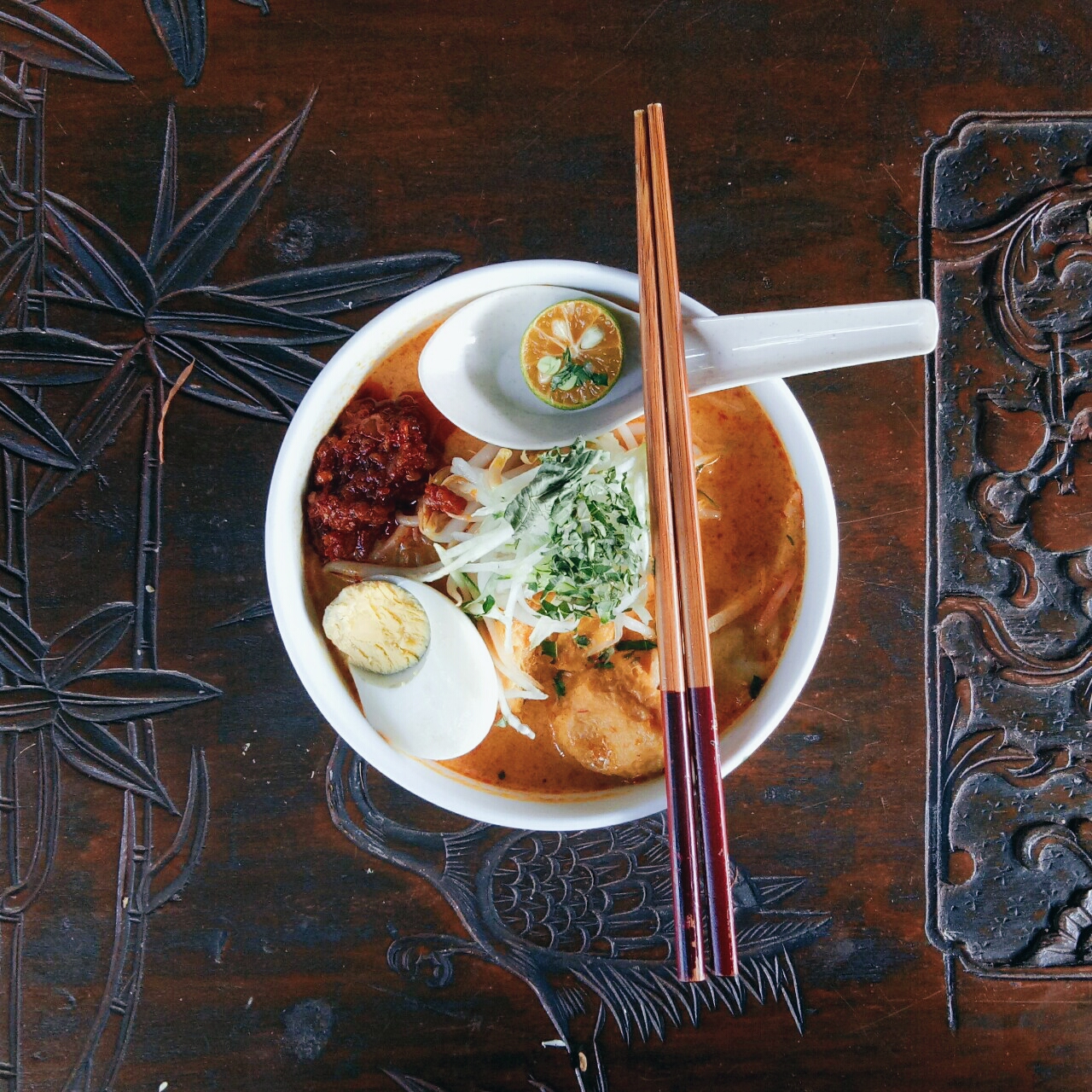
Coconut-curry noodle soup with prawns, fish cake, and a sambal punch — Peranakan cooking's most famous export, with as many regional variants as Malay states.

Larb
Minced meat tossed with toasted rice powder, fish sauce, lime, chili, mint, and shallot — the meat salad of Laos and Isan Thailand, eaten with sticky rice.

Lechon
A whole pig stuffed with lemongrass, garlic, and herbs, rotated over coals for hours until the skin shatters — the Philippines' celebration centrepiece, the rite-of-passage dish.

Lumpia
Filipino spring rolls — fried *lumpiang Shanghai* with pork, or fresh *lumpiang sariwa* in a soft wrapper — a household staple at every party.

Mango Sticky Rice
Sticky rice steamed and soaked in salted coconut cream, served with sliced ripe mango — Thailand's hot-season dessert that depends entirely on the fruit.

Masala Dosa
A fermented rice-and-lentil crepe folded around a yellow potato-and-onion filling, served with coconut chutney and sambar — South India's defining breakfast.
Massaman Curry
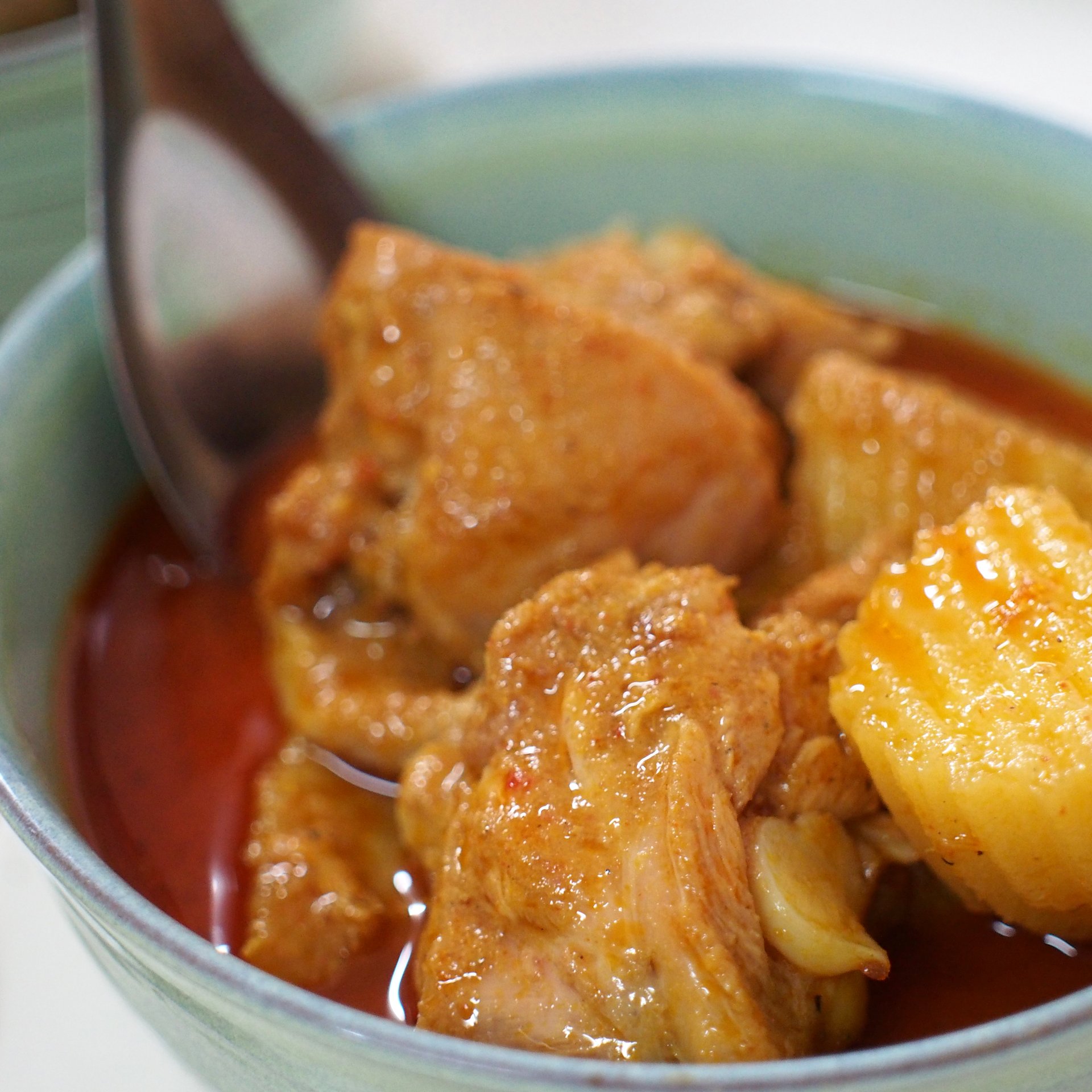
A Persian-Indian-Malay-Thai synthesis curry with beef, potatoes, peanuts, and a base of cinnamon, cardamom, and star anise — the slowest, mildest, most fragrant of the Thai curries.

Mie Goreng
Egg noodles stir-fried with kecap manis, chicken or prawn, vegetables, and a fried egg on top — the noodle answer to nasi goreng, eaten everywhere across Indonesia.

Mohinga
A catfish-and-banana-stem broth over rice vermicelli, thickened with toasted chickpea flour — Myanmar's national breakfast soup.

Momo
Steamed dumplings filled with spiced minced meat or vegetables, served with a tomato-based dipping chutney — Nepal and Tibet's defining street-food dumpling.

Naan
Leavened flatbread slapped to the wall of a clay tandoor, blistered and puffy in under a minute — North India and Persia's daily bread.

Nasi Goreng
Day-old rice fried with kecap manis and sambal, crowned with a fried egg — Indonesia's national leftover.

Nasi Lemak
Coconut rice steamed with pandan, served with sambal, fried anchovies, peanuts, cucumber, and a hard-boiled egg — Malaysia's banana-leaf breakfast.

Okonomiyaki
Cabbage-and-batter pancake griddled at the table, topped with sweet-savoury sauce, mayo, bonito flakes, and seaweed — Osaka or Hiroshima, two different dishes by the same name.

Onigiri
Hand-pressed rice balls wrapped in nori, often hiding a piece of salted salmon, pickled plum, or bonito flakes — Japan's portable lunch for twelve centuries.

Pad Kra Pao
Minced meat stir-fried with holy basil, chili, garlic, and fish sauce — Thailand's weeknight default, ordered over rice with a fried egg on top.

Pancit
A family of Filipino noodle dishes — *bihon*, *canton*, *palabok*, *malabon*, *habhab* — eaten at every birthday for long life.

Phở
The broth that built a country's breakfast — beef bones, charred ginger, star anise, and a forest of fresh herbs added at the table.

Rendang
Beef simmered in coconut milk and spice paste until the liquid evaporates and the meat fries in its own concentrated paste — Minangkabau's gift to the world.

Rogan Josh
Kashmiri lamb braised in yogurt and Kashmiri chili for a deep red gravy, perfumed with fennel, ginger, and cardamom — the showpiece of *Wazwan*, Kashmir's banquet cuisine.

Roti Canai
A flaky, layered Indian-Muslim flatbread slapped flat and griddled to a crisp shatter, served with curry dipping sauce — Malaysia's breakfast institution.

Samgyeopsal
Thick-cut pork belly grilled at the table, wrapped in lettuce with ssamjang, garlic, and a slice of raw chili — Korea's most-eaten dinner-out dish.

Samosa
A deep-fried pastry triangle stuffed with spiced potatoes, peas, and cumin — South Asia's defining snack, with parallels from Cairo to Cape Town.

Sashimi
Sliced raw fish, ice-cold and knife-cut, served on a leaf with grated wasabi — the Japanese dish that has no cook, only a knife.

Satay
Bamboo-skewered meat grilled over charcoal, served with peanut sauce and compressed rice cake — the Southeast Asian skewer that grew up Javanese.

Shabu-Shabu
Paper-thin beef swished through clear kombu broth at the table — Japan's minimalist hot pot, named for the swish-swish sound the meat makes.

Shoyu Ramen
Soy-tare-seasoned ramen with a clear chicken or pork-and-chicken broth — Tokyo's original ramen and the form everything else is measured against.

Sinigang
A sour pork-and-vegetable soup soured by tamarind, mango, or kamias — the dish Filipinos miss most when they're away from home.

Siu Mai
Open-topped steamed dumplings of pork and shrimp wrapped in yellow wheat-egg wrappers, garnished with a dot of crab roe or carrot — Cantonese dim sum's standard partner to har gow.

Soba
Buckwheat noodles served cold on a bamboo mat with a dashi-soy dipping sauce — Japan's mountain-cuisine noodle, a study in restraint.

Som Tam
Green papaya pounded in a clay mortar with chili, fish sauce, palm sugar, lime, and dried shrimp — Isan's most-eaten salad, hot-sour-salty-sweet in a single bowl.

Soto Ayam
Turmeric-yellow chicken broth with shredded poached chicken, glass noodles, hard-boiled egg, fried shallots, and a squeeze of lime — Indonesia's everyday soup, eaten morning to midnight.

Sukiyaki
Thin-sliced beef and vegetables simmered at the table in a sweet-soy *warishita* sauce, dipped in raw egg — Meiji-era Japan's beef-celebration hot pot.

Sweet and Sour Pork
Battered pork pieces tossed in a glossy red-orange sauce of vinegar, sugar, ketchup, and pineapple — Cantonese in origin, made fluorescent by global takeout, eaten everywhere.

Taiwanese Beef Noodle Soup
Slow-braised beef shank and tendon in a soy-spice-Sichuan-chili broth, over hand-pulled wheat noodles — Taipei's most-defended dish.

Takoyaki
Spherical batter balls with a piece of octopus inside, cooked in cast-iron half-spheres and turned by hand with a skewer — Osaka's street snack that requires equipment.

Tonkatsu
Thick-cut pork loin in panko, deep-fried to a sandcastle-crisp coat — Japan's Western-cuisine import that became more Japanese than any of its sources.

Tteokbokki
Cylindrical rice cakes simmered in a fiery gochujang sauce with fish cake and scallion — Seoul's street snack that became a national obsession.

Udon
Thick, chewy wheat noodles in a clear bonito-dashi broth — Japan's everyday comfort noodle, refined into ritual on Shikoku.
Unadon
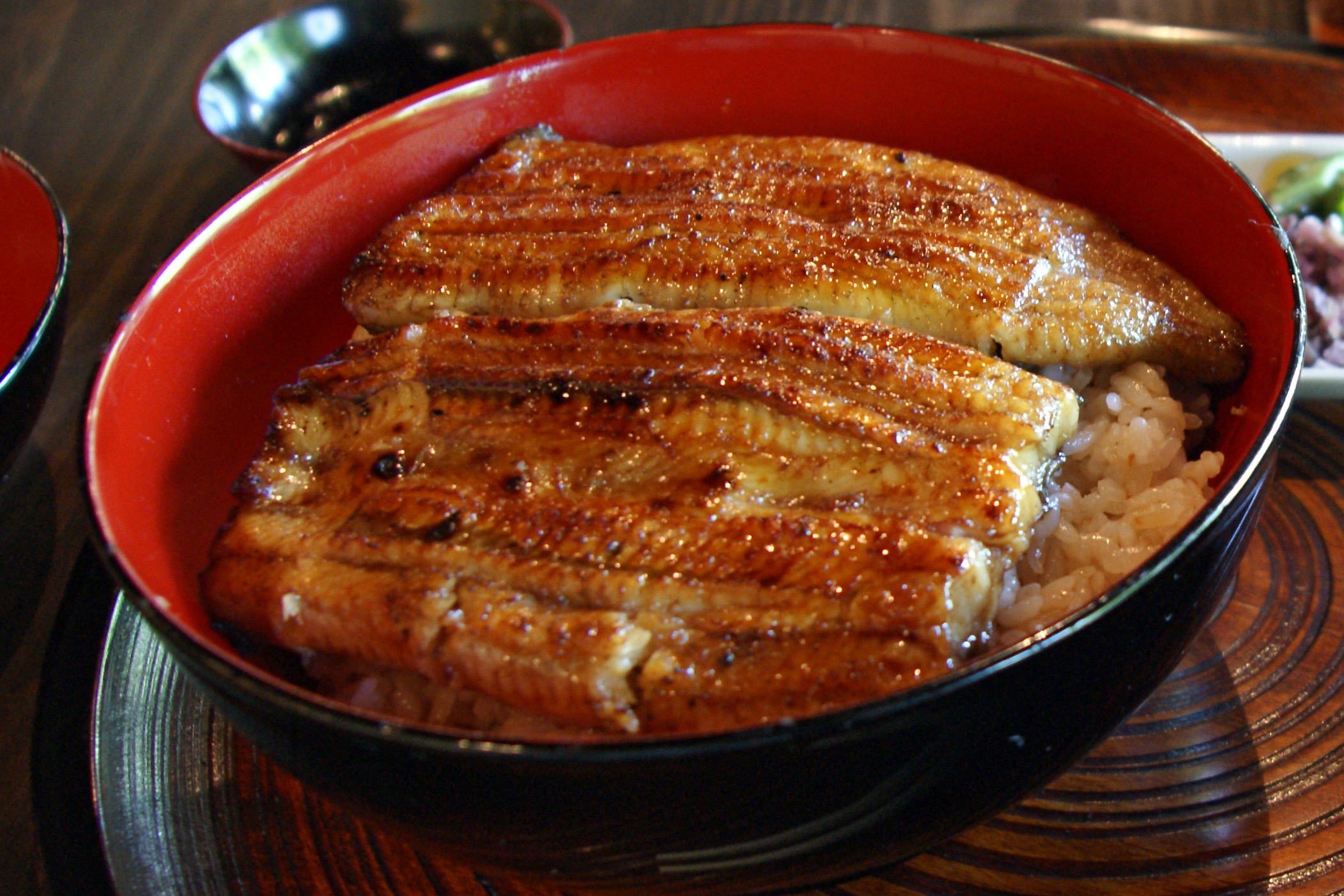
Grilled freshwater eel glazed with sweet-soy *tare*, served over rice in a lacquer box — Japan's summer-stamina dish, eaten on the Day of the Ox.

Wonton Noodle Soup
Springy alkaline egg noodles, prawn-and-pork wontons, a clear dried-flounder broth — Hong Kong's hawker-stall lunch institution.

Xiaolongbao
Shanghai soup dumplings — a pleated parcel of pork and aspic that liquefies into a teaspoon of broth when steamed.

Yakitori
Chicken on bamboo skewers, charcoal-grilled over Bincho-tan, glazed with tare or salted plain — Japanese izakaya's most disciplined dish.