Peranakan, Malaysian-Singaporean coast
Laksa
Coconut-curry noodle soup with prawns, fish cake, and a sambal punch — Peranakan cooking's most famous export, with as many regional variants as Malay states.
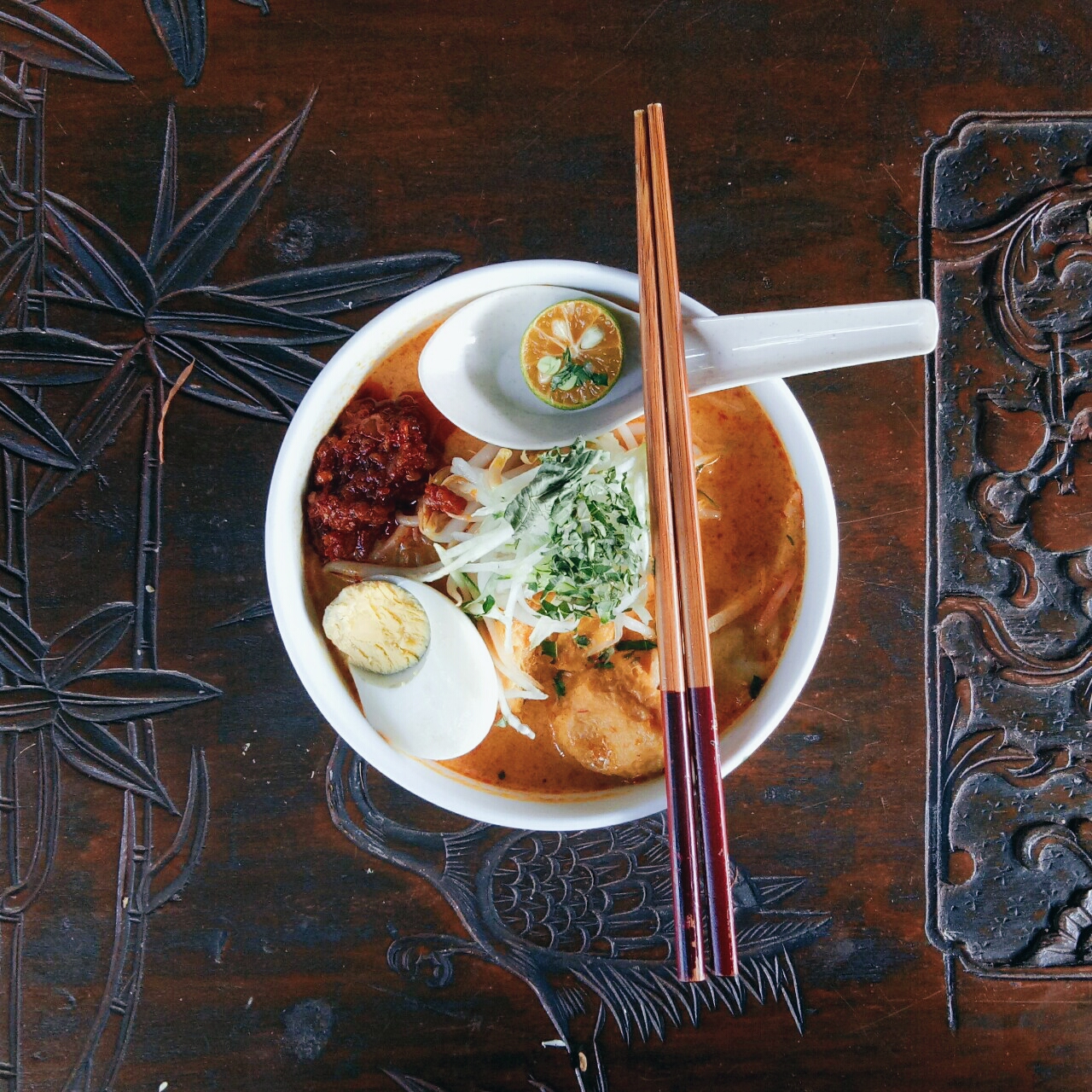
There is no the laksa.
Laksa is a family of dishes, not a single recipe. *Laksa lemak* / *Nyonya laksa* is the coconut-curry one. *Asam laksa* from Penang is sour-tamarind with mackerel — no coconut at all. *Sarawak laksa* is sambal-belacan-based and prawnier. *Katong laksa* in Singapore cuts the noodles short so the spoon does the work. All call themselves laksa. All have a defender. Pick a city and you pick a tradition.
4 · Plate
Peranakan, Malaysian-Singaporean coast
Laksa
Coconut-curry noodle soup with prawns, fish cake, and a sambal punch — Peranakan cooking's most famous export, with as many regional variants as Malay states.
A Peranakan dish. Peranakan is the descendant culture of Chinese migrants who settled in the Malay archipelago in the 15th–17th centuries and married into Malay families — a cuisine that’s neither Chinese nor Malay but a mature synthesis with its own grammar. Laksa is its most-travelled ambassador.
The base technique is a spice paste (rempah) — dried chilies, candlenuts, turmeric, galangal, lemongrass, shrimp paste — fried in oil until aromatic, then loosened with coconut milk and shrimp stock into a broth. The Penang asam laksa diverges hard: tamarind and mackerel and daun kesum (laksa leaf) with no coconut milk at all, finishing closer to a Thai jungle-curry than to anything else in the laksa family.
Mix in the sambal.
A spoonful of bright red sambal sits on the rim of the bowl. The eater stirs it in to taste — a quarter for medium-heat, all of it for the heat the cook intended. The broth gets darker, oilier, more dangerous; that's the dish landing.