Philippines (Pampanga / Manila)
Kare-Kare
Oxtail and vegetables in a thick orange peanut-and-annatto sauce, served with a side of bagoong shrimp paste — the Filipino fiesta dish that takes a day to make.
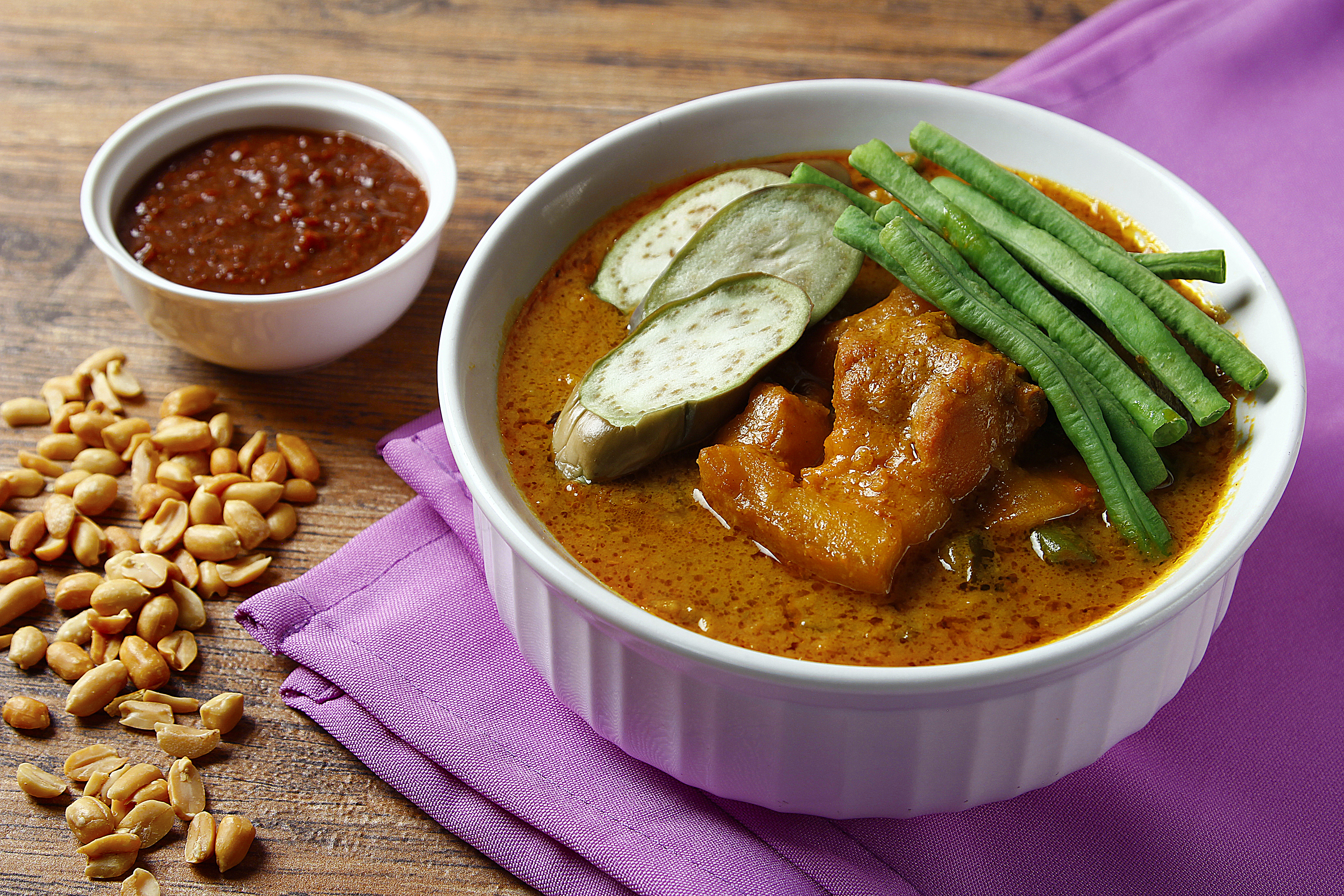
Peanut is the body.
Kare-kare's sauce is built on roasted ground peanuts — or, in some kitchens, peanut butter — thickened with toasted ground rice and coloured with annatto seeds. The result is a viscous, slightly grainy orange-brown sauce that coats the oxtail and vegetables. A great kare-kare sauce reads of peanut-roasting depth, not of sweetened peanut butter; the difference is whether the cook ground their own peanuts that morning.
4 · Plate
Philippines (Pampanga / Manila)
Kare-Kare
Oxtail and vegetables in a thick orange peanut-and-annatto sauce, served with a side of bagoong shrimp paste — the Filipino fiesta dish that takes a day to make.
A Filipino fiesta centrepiece. Kare-kare (the doubled name is a Tagalog intensifier, meaning roughly “curry-curry” — though the dish bears no resemblance to a subcontinental curry) is associated most strongly with Pampanga province, the Filipino “culinary capital” north of Manila. The dish requires hours of work — peanut grinding, oxtail braising, vegetable timing — and is reserved for celebration meals.
The dish’s origin is genuinely contested. Some accounts trace it to the Mughal-era kari (sauce) tradition brought by Indian traders. Others link it to a Filipino household adaptation of a Spanish-Moroccan slow-cooked tagine. The most plausible reading is that kare-kare is an indigenous Pampanga creation that incorporated peanut, annatto, and oxtail from local availability, and the Indian-sounding name is folk etymology added later. The dish is, in any case, unmistakably Filipino now.
Bagoong on the side.
The sauce itself is mild — not sweet, not spicy, gently nutty. The dish gets its punch from a small dish of *bagoong alamang* — fermented shrimp paste, sometimes sautéed with garlic and chili — that the eater spoons onto the plate to taste. The Filipino kitchen rule: kare-kare without bagoong is a sweet stew. Add the bagoong and it becomes the dish.